
Fall Freight Horizons: E-commerce. Trade Transport and Turmoil.
As the weather cools down, the global trade landscape boils over with uncertainty, but does this mean a brighter future for air cargo, or will proposed tightening of the de minimis rules throw a wrench in the works for e-commerce driven freight?
Summer 2024 is officially in the rear view mirror. This year though, it seems peak season has come early and with some considerable momentum compared to last year. Ongoing trouble in global ocean shipping, an upcoming East Coast port strike, and the steady increase of e-commerce volumes are all pointing to a moment in the sun for an alternative to congested, uncertain, and increasingly costly ocean transport.
Ocean shipping is under pressure from multiple sides. So what are the factors driving the current state of play?
Panama Canal
The past year or so has seen a significant pile up in challenges for ocean freight.
The Panama Canal reduced traffic due to a historic drought last year at Gatún Lake, which supplies the water used to operate the canal’s locks. Water levels at Gatún Lake were the lowest since at least 1965. Naturally this raises costs for shippers, but in and of itself might only have caused an uptick in costs passed to consumers and an increase in delivery times or product availability as the ripples spread out through the market. While it appears the drought has broken and the canal is again increasing slots for transits, this backlog came at an entirely inopportune time for shipping.

At A Glance
- The Panama Canal reduced traffic due to a historic drought at Gatún Lake last year.
- Water levels at Gatún Lake were the lowest since at least 1965.
- Shippers experienced rising costs due to increased delivery times and transit expenses.
Ships Burning in the Red Sea
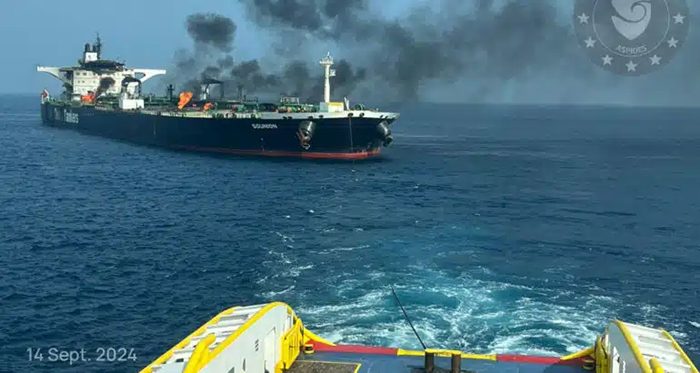
At the same time, the Houthi Rebels have become increasingly brazen in their attacks on shipping in the Red Sea. As of the time of writing, the Greek-owned and flagged MV Sounion, carrying about a million barrels of crude oil is still burning.
Insurance costs resulting from war risk have risen by 900%, and in some cases more than 1% of total value, a potentially crippling cost increase for some shippers. Combine this with greater transit times – along with fuel costs (for ships rerouted south of the Cape of Good Hope) – and we’re seeing increases up to 193% more than the average (pre-pandemic) rate of $1,420. (Source: Drewry, WCI composite index per 40ft container)
At A Glance
- Houthi Rebels continue to attack ships transiting the Bab el Mandeb Strait.
- At least one ship, MV Sounion, is currently on fire.
- Insurance costs resulting from war risk have risen by 900%, often over 1% of total value.
A Looming East Coast Port Strike
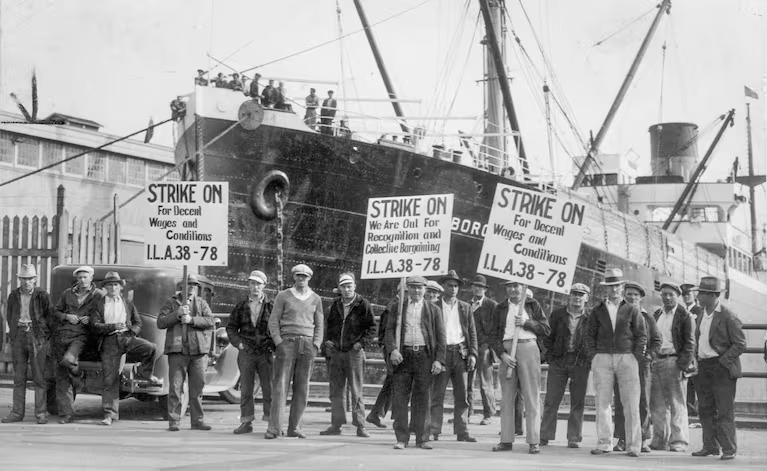
The International Longshoremen’s Association (ILA) strike has emerged as a major concern for businesses relying on U.S. East Coast and Gulf Coast ports for shipping goods. This strike, primarily driven by disputes over wages, automation, and working conditions, has the potential to cause significant disruptions for retailers and manufacturers. Some observers are predicting a potential crippling of the U.S. and possibly even the global economy, although most of us are reserving judgment until this complex situation begins to play out in a few weeks. Everyone relying on the East Coast supply chain is scrambling to find alternatives.
What is undeniable though, is that this confluence of factors (and more) has increased cost and uncertainty in the global ocean shipping system.
At A Glance
- ILA workers are set to strike on October 1st.
- Uncertainty at best and economic disruption at worst is potentially on the horizon.
- Expect congestion, delays and added cost as the entire supply chain looks for alternatives.
But wait, there’s more…
E-commerce, as a percentage of total retail market share, is growing at a rapid rate. Consumers are becoming increasingly used to ultra-cheap products, usually from China, arriving quickly to their doorstep.
According to Statista, e-commerce revenue is expected to show an annual growth rate (CAGR 2024-2029) of 9.49%, resulting in a projected market volume of U.S. $6,478.00bn by 2029.
One of the main drivers of the e-commerce business model is the ever increasing, seemingly insatiable consumer demand in the west for low-cost fast-fashion, apparel and textiles. Shipments from Chinese fast-fashion operator, Shein alone make up a staggering 20% of U.S. fashion purchases. Combined with Temu, Alibaba and similar players contribute to an enormous slice of the e-commerce pie and are directly impacting air and ground freight. In July alone, each retailer provided carriers with about 900,000 packages daily in the U.S., according to ShipMatrix data.
Air cargo carriers, big and small are betting on this increasing growth. Chinese exports in this sector require speedy delivery by air (typically 12 or less days of transport as opposed to 40 or less by sea) and, because they are ultra-cheap, they bypass tariffs when the total value is less than the $800 de minimis. DHL Express, for example, is “predicting an 8.8% increase in volume for 2024 and investing 100 million euros to increase capacity for the 2024 peak season.” The rapid, tariff-free transport of low-cost fast-fashion goods creates a perfect storm for air cargo volume spikes, a strain on capacity, and competing economic pressures.
Does the Q4 2024 Picture Look Bright for Airfreight?
While this unstoppable growth, combined with uncertainty in the ocean side of the supply chain, is a positive signal for package fliers everywhere, a recent focus on freight rules by the U.S. Government might mean dark clouds on the horizon.
Recently, the White House said: “The Biden-Harris administration is taking new actions to address the significant increased abuse of the de minimis exemption, in particular China-founded e-commerce platforms, and strengthening efforts to target and block shipments that violate U.S. laws.”
The executive order could cost shippers a sizable chunk of money, with changes potentially on the way before the traditionally high-volume Black Friday shopping cycle that kicks off peak season.
The de minimis rules, which currently allow goods valued at up to $800 to enter the U.S. duty-free, could be denied for products subject to Section 301, 201 and 232 duties. Standard import entries would be required instead.
requirements under the tightened rules is likely to add costs to the system, but demand is only going to grow, and with most individual shipments averaging $55 in value – well below the current (or proposed) threshold – the e-commerce players and shippers will undoubtedly adapt.
Stay tuned for an exciting end to an exciting year in global transport.